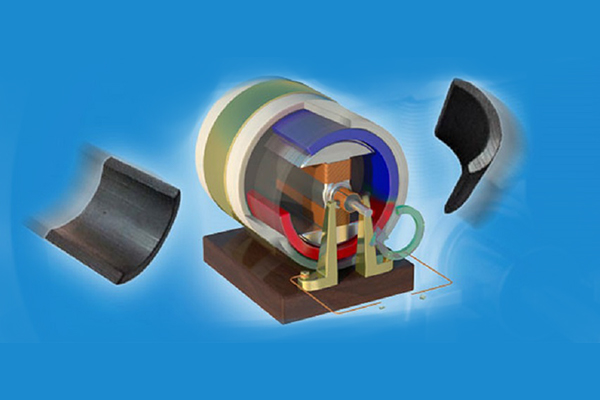
When people talk about AI hardware, the focus is usually on chips, models, and algorithms. But behind every physical AI system—robots, autonomous machines, smart sensors—there’s a quieter enabler at work: magnetic systems.
Magnets are everywhere in AI hardware:
- Precision motors and actuators that let robots move smoothly and accurately
- Magnetic sensors that enable perception, position tracking, and feedback loops
- Power and thermal management systems where efficiency and reliability matter
- Compact, high-performance components critical for space-constrained designs
As AI moves from software into the physical world, hardware teams face a new challenge: turning bold ideas into reliable, manufacturable systems. Magnetic performance, material choices, tolerances, and supply chain coordination suddenly become mission-critical.
This is where magnetic systems stop being “off-the-shelf parts” and start becoming engineering solutions.
At CT Magnetics, we work closely with AI hardware and robotics teams from early design through prototyping and pilot production—bridging engineering requirements with a globally optimized magnetic supply chain. The goal isn’t just better magnets, but faster iteration, lower risk, and smoother paths from lab to real-world deployment.
AI may be powered by code—but it’s built on physics.
And magnets are one of the quiet forces making physical AI possible.